Recently, the team led by Associate Professor Kong Fanpeng from the Department of Electrochemical Engineering, School of Chemistry and Chemical Engineering, Harbin Institute of Technology, has achieved a series of breakthroughs in key materials and interface engineering for proton-exchange membrane fuel cells (PEMFCs). Two high-level research papers have been published successively in the internationally renowned journal Nature Communications. Working along two lines—spin regulation of active sites and optimization of the catalytic-layer interface microenvironment—the team has systematically addressed critical bottlenecks: the sluggish kinetics of the acidic oxygen reduction reaction (ORR), ionomer poisoning, and severe mass-transport resistance in low-platinum electrodes. These findings provide important theoretical foundations and technical support for the development of next-generation fuel cells with high power density and long service life.
Achievement 1: Coulombic Surface Dipoles Trap Ionomers to Optimize the Electrode Interface Microenvironment
Low-platinum-loading membraneelectrode assemblies (MEAs) are critical for reducing fuel cell costs. However, in low-platinum electrodes, ionomer agglomeration on catalyst surfaces and the poisoning of Pt active sites through competitive adsorption by sulfonic acid groups (-SO3-) lead to severe oxygen mass-transport resistance and loss of active sites.
To address this challenge, the team proposed an interface-engineering strategy that employs Coulombic surface dipoles to trap ionomers. They constructed a bifunctional catalyst (SCDC-Pt) modulated by cobalt single-atom dipoles. Strong ion-dipole interactions firmly anchor the sulfonic acid groups of the ionomer to the outer catalyst layer, preventing them from poisoning the inner Pt active sites. Diagnostic results showed that the apparent sulfonic acid group coverage on the SCDC-Pt catalyst surface decreased from ~20% for commercial Pt/C to ~8%, while the local oxygen-transport resistance dropped from 48.1 S m-1 to 38.6 S m-1. The strategy also promoted uniform ionomer dispersion and markedly enhanced the structural durability of the catalytic layer.
Harbin Institute of Technology is the primary corresponding institution. Wang Siyuan and Associate Professor Kong Fanpeng are the co-first authors of the paper. Associate Professor Kong Fanpeng, Academician Sun Xueliang of Western University (Canada), Du Lei of Guangzhou University, and Professor Zhao Bo of Harbin Institute of Technology are the co-corresponding authors.
This research was funded by the National Natural Science Foundation of China and the Natural Science Foundation of Heilongjiang Province.
Paper link: https://www.nature.com/articles/s41467-026-74391-4#Fun
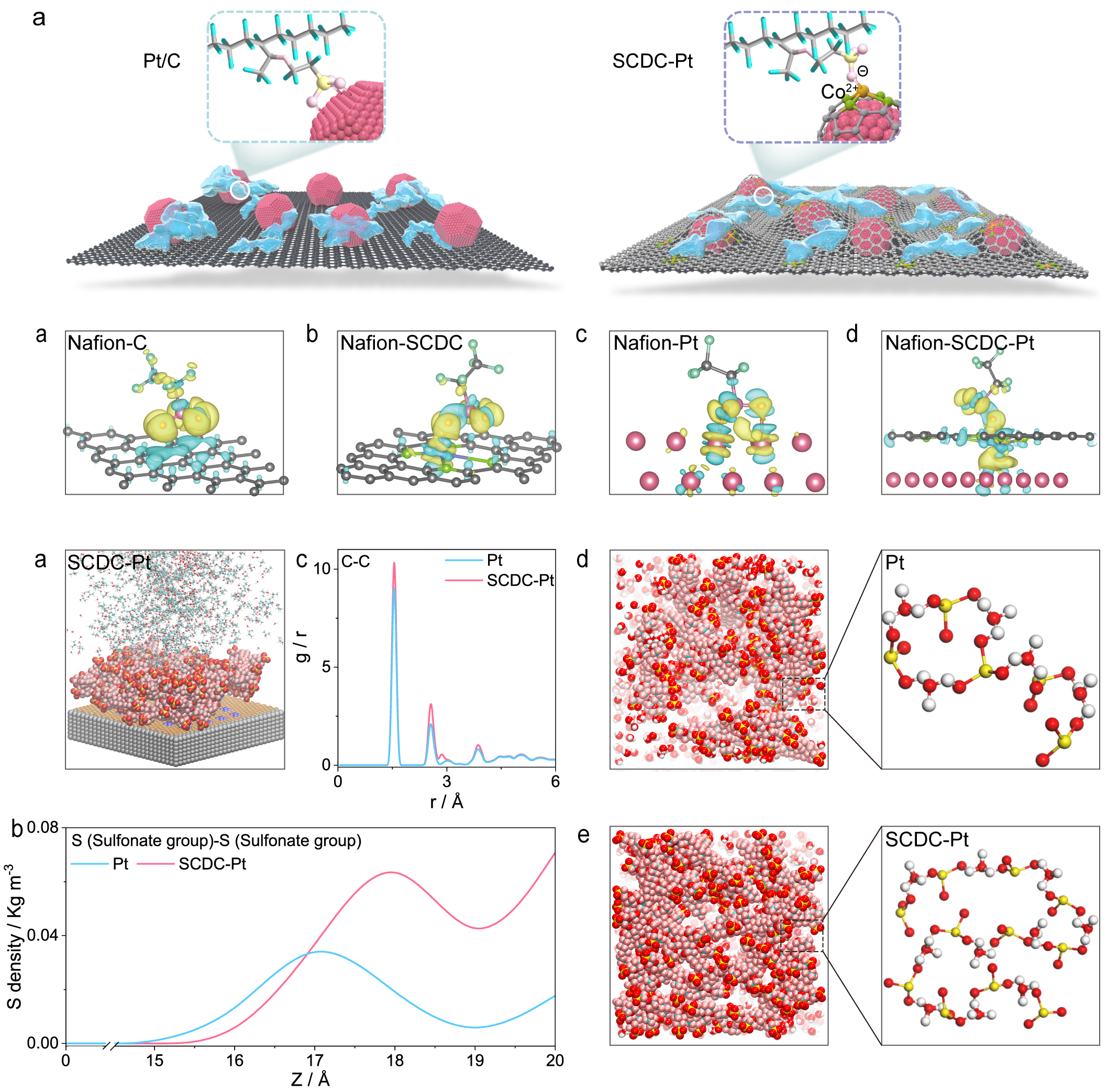
Schematic illustration of single-atom dipoles trapping the sulfonate sidechains of ionomers
Achievement 2: Spontaneously Ferromagnetic Fe-La Geminal Atoms Modulate Acidic OxygenReduction Performance
Sluggish ORR kinetics under acidic conditions severely limit the energyconversion efficiency of PEMFCs. Synergistic spin-state regulation combined with local coordination engineering is an effective strategy for boosting the performance of non-noble-metal Fe-N-C catalysts. However, establishing intrinsic ferromagnetic spin ordering and achieving long-term stability without an external magnetic field remains challenging.
The team innovatively introduced the rare-earth element lanthanum (La) to partially replace conventional d-block metals and, together with iron (Fe), constructed a unique d-f heteronuclear geminal-atom structure (Fe-La/NC). Experiments and theoretical calculations showed that La incorporation promotes spin-polarized high-spin configurations of the Fe 3d orbitals as well as room-temperature ferromagnetic ordering, thereby precisely tuning the local electronic structure and the adsorption of oxygen intermediates. Moreover, the La-induced spin-pinning effect stabilizes the active sites through a dynamic self-adaptation mechanism. Under acidic conditions, the catalyst delivered a half-wave potential of up to 0.92 V. In hydrogen-oxygen fuelcell tests, it achieved a peak power density of 1.9 W cm-2 and retained 86% of its initial performance after 100 hours of stable operation at 0.67 V, effectively overcoming the activity-stability trade-off.
Harbin Institute of Technology is the primary corresponding institution. Associate Professor Kong Fanpeng, Gong Qing of the Energy Research Institute of Jiangxi Academy of Sciences, and Mei Bingbao of the Shanghai Synchrotron Radiation Facility are the co-first authors of the paper. Zhao Shenlong of the National Center for Nanoscience and Technology and Dong Juncai of the Institute of HighEnergy Physics, Chinese Academy of Sciences, are the co-corresponding authors.
This research was funded by the National Natural Science Foundation of China, the Natural Science Foundation of Heilongjiang Province, and the Natural Science Foundation of Jiangxi Province.
Paper link: https://www.nature.com/articles/s41467-026-77285-7
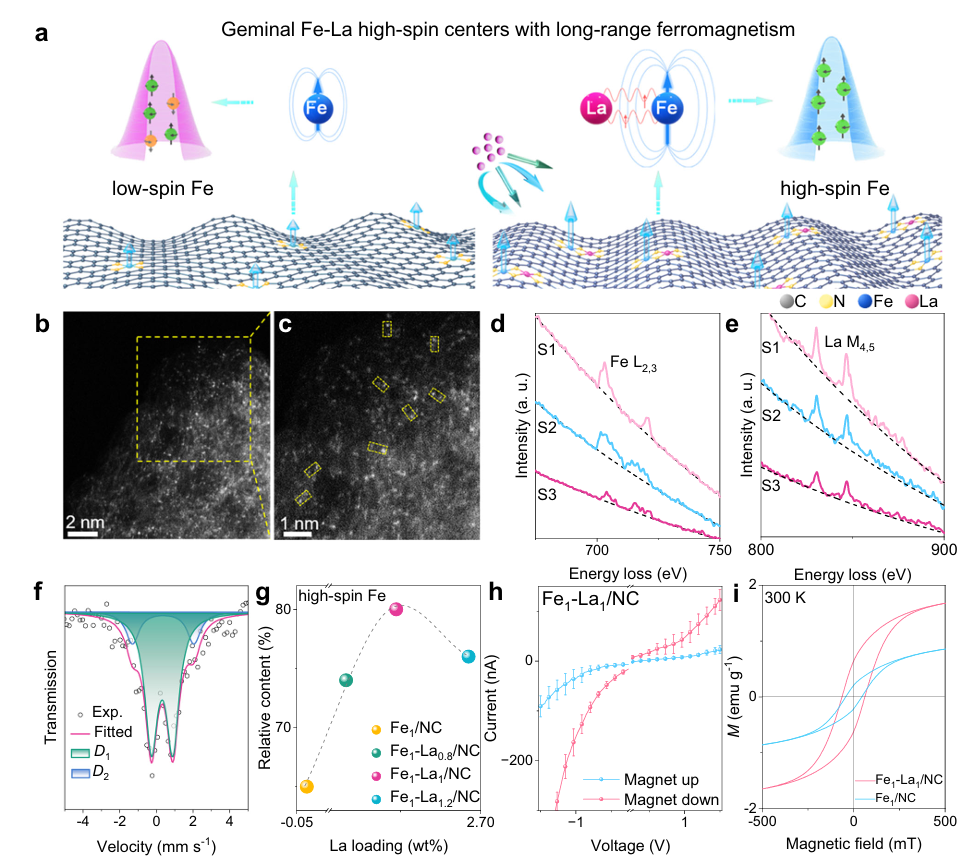
Long-range ferromagnetic high-spin centers of Fe-La/NC
About the Authors:
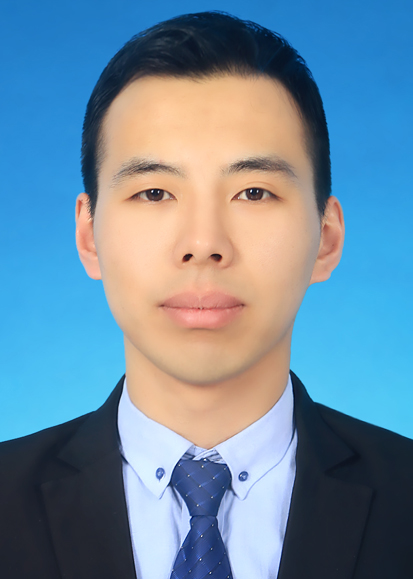
Kong Fanpeng is an Associate Professor and Doctoral Supervisor at Harbin Institute of Technology. He was selected under the University’s Young Talent Promotion Program and is a high-level talent of Heilongjiang Province, a recipient of the Heilongjiang Provincial Excellent Youth Fund, and a Young Science and Technology Talent awardee.
Research Interests: PEM fuel cells and water electrolysis

WangSiyuan is a Ph.D. candidate (class of 2022) at the Institute of Special Chemical Power Sources, School of Chemistry and Chemical Engineering, under the supervision of Associate Professor Kong Fanpeng.Her research focuses on related fields. She has published two SCI-indexed papers in leading international journals, including Nature Communications; she holdsone granted Chinese invention patent, and six additional Chinese invention patent applications have been filed and accepted for examination. She also completed a one-year research internship at the Shanghai Institute of Space Power Sources, gaining valuable experience in scientific research and engineering applications.