On the morning of April 23, 2026, Academician Evgeny V. Antipov, a member of the Russian Academy of Sciences, was invited as a guest to the Mingde Lecture of the School of Chemistry and Chemical Engineering. He delivered a cutting-edge academic report on the topic of cathode materials for lithium-ion batteries. The event was hosted by Wang Jiajun, Head of the Department of Electrochemical Engineering. Party Secretary Liu Guanghui and Vice Dean Lu Songtao attended the lecture. Faculty members, undergraduate and graduate students, as well as international students from relevant disciplines actively participated in the session.
In his report, Academician Evgeny V. Antipov delved into the fundamental research and industrial applications of Lithium Iron Phosphate (LFP) cathode materials. He pointed out that LFP cathode materials have become a research hotspot in the field of electrochemical energy storage due to their excellent structural stability, safety, and cost advantages. However, the material still faces core technical bottlenecks, including low electronic conductivity and limited lithium-ion diffusion coefficient. While existing optimization strategies such as nanoscale structural design and carbon coating have delivered certain performance improvements, balancing high-rate capacity and low-cost controllable synthesis remains an unsolved key challenge.
To address these challenges, Academician Antipov’s team employed defect engineering as a core regulatory approach, precisely controlling synthesis routes and chemical compositions to successfully construct a series of LFP cathode materials with superior electrochemical performance. The report highlighted several structural design strategies based on Li-Fe antisite defects, Mn-doped solid solutions, and phosphorus defect modulation, demonstrating the excellent electrochemical performance of these novel high-power cathode materials under demanding conditions such as fast charge/discharge and long-term cycling stability. After the report, faculty and students actively raised questions and engaged in in-depth discussions with Academician Antipov on key issues related to LFP battery research. Academician Antipov provided professional answers, creating a vibrant academic atmosphere.
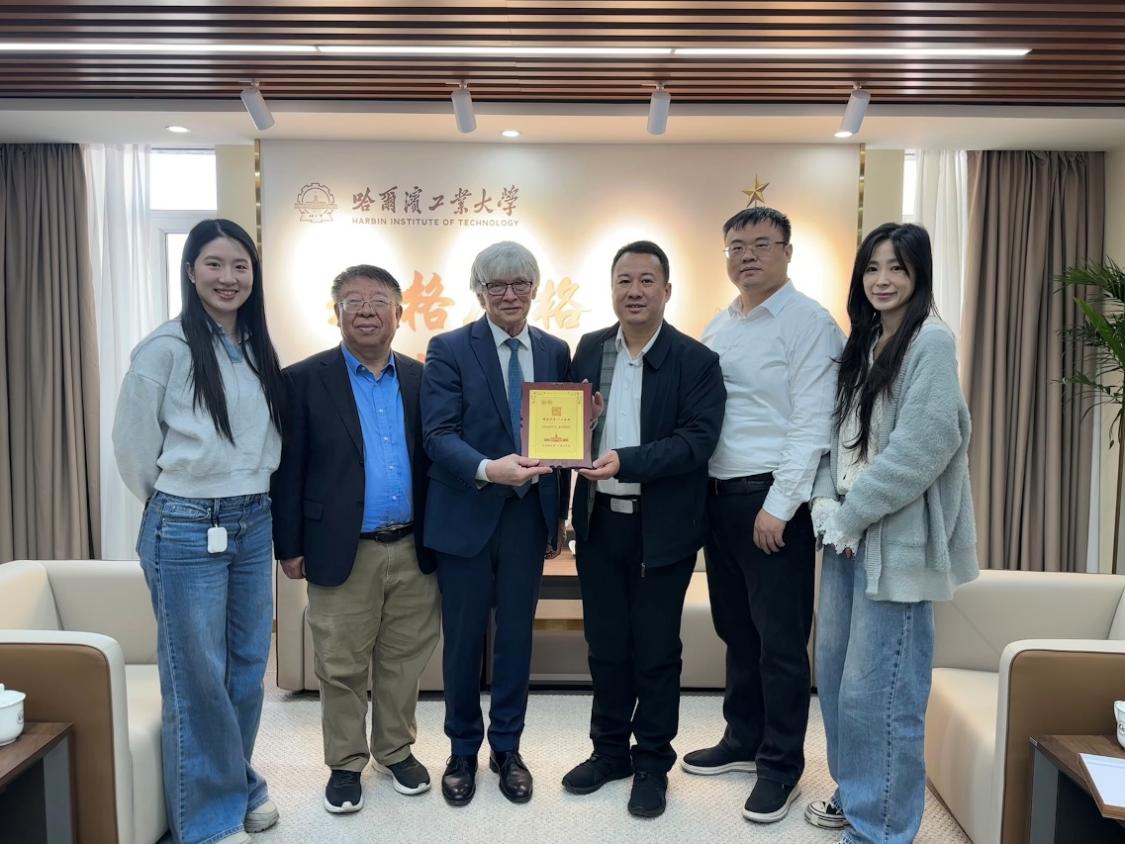
Figure 1: Secretary Liu Guanghui (third from right) and Vice Dean Lu Songtao (second from right) presenting the Mingde Lecture commemorative plaque to Academician Evgeny V. Antipov (third from left).
This session of the Mingde Lecture built a high-quality platform for our faculty and students to interact face-to-face with a world-renowned scholar. Academician Antipov’s cutting-edge academic sharing broadened the research horizons of our faculty and students, offering new ideas for future research in electrochemistry, lithium-ion battery materials, and related fields. In the future, the School of Chemistry and Chemical Engineering will continue to deepen international academic exchanges and cooperation, promote interdisciplinary integration, and continuously improve the quality of talent cultivation and the level of scientific and technological innovation.
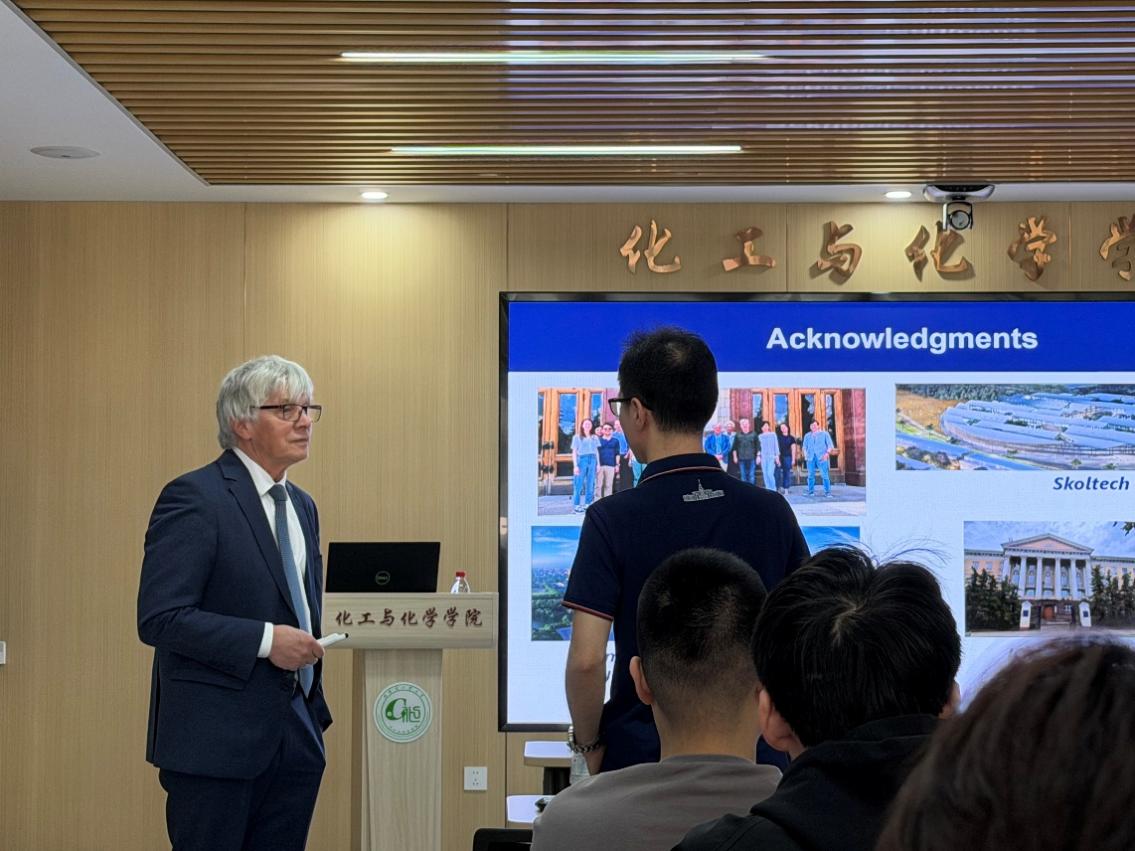
Figure 2: Academician Evgeny V. Antipov addressing questions from faculty and students
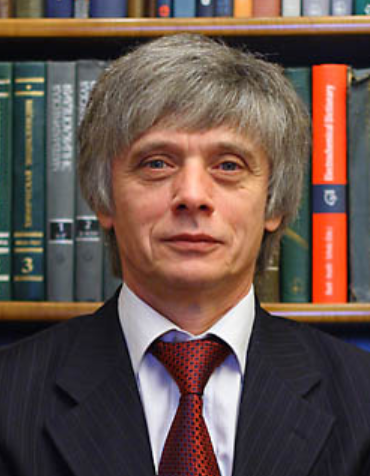 Speaker Biography: Evgeny V. Antipov is a Professor and Head of the Department of Electrochemistry at Lomonosov Moscow State University, and also a Professor at the Energy Science and Technology Center of the Skolkovo Institute of Science and Technology (Skoltech). He is a full member of the Russian Academy of Sciences and a member of the European Academy of Sciences. After receiving his Candidate of Sciences (PhD equivalent) and Doctor of Sciences degrees from Lomonosov Moscow State University, he remained at the university for teaching and research, holding positions from Junior Researcher to Lead Researcher, Head of Laboratory, and Head of Department. Since 2018, he has also been a Professor at Skoltech. His main research area is inorganic materials for electrochemical energy applications. His current research focuses on the synthesis and development of functional oxide materials (ferrites, manganates, cuprates, etc.), novel superconductors, and energy storage systems. He serves as a coordinator for the "Chemistry and Materials Science" section of the Russian Science Foundation and as Vice-Chairman of the Scientific Council for the Development of Energy Storage Systems of the Russian Academy of Sciences, among other major scientific roles. He has published more than 440 academic papers and owns 16 authorized patents.