Recently, Prof. Xiaojun Han and his team from the School of Chemistry and Chemical Engineering at Harbin Institute of Technology (HIT), a member of the State Key Laboratory of Urban-rural Water Resource and Environment, comprehensively reviewed the research progress in artificial cells, including the processes, reaction conditions, and design concepts of energy generation, anabolism, and catabolism, as well as the applications of metabolically functional artificial cells in biosensing, disease therapy, and other fields. This work provides important theoretical guidance for the development of autonomous artificial cells. The related findings have been published in Chemical Society Reviews under the title "Advances in artificial cells capable of metabolic mimicry: from fundamentals to applications."
Artificial cells represent a significant research direction in synthetic biology, aiming to construct systems with partial or complete life characteristics using non-living substances. Metabolism is a crucial component of artificial cells, reconstructing natural metabolic pathways within artificial cells to endow them with functions such as energy production, substance synthesis, and decomposition constitutes the foundation for realizing autonomous artificial cells. The article systematically analyzes and compares the advantages and limitations of three major artificial cell systems (coacervates, proteinosomes, and phospholipid vesicles) in reconstructing metabolic pathways. It points out that different types of artificial cells exhibit distinct characteristics in terms of catalytic efficiency, substance exchange, and system stability due to differences in their physical properties such as internal phase state, permeability, and stability, providing a basis for the construction of artificial cells for various application scenarios.
The article further summarizes the research progress in energy and substance metabolism in artificial cells. Energy metabolism achieves ATP synthesis through encapsulating natural organelles and reconstructing photophosphorylation process; substance metabolism includes carbon dioxide fixation, phospholipid synthesis, protein expression, carbon-nitrogen decomposition, etc. Despite the rapid development of this field, the article also identifies current challenges, such as the sustainability of energy supply, complexity of metabolic pathways, and system stability. Possible solutions are proposed, offering valuable insights for the development of autonomous artificial cells.
HIT is the sole corresponding institution of the paper. Prof. Xiaojun Han, Associate Researcher Shubin Li from the School of Chemistry and Chemical Engineering, and Associate Researcher Xiangxiang Zhang are co-corresponding authors. Doctoral student Yan Jia is the first author, with contributions from Associate Researcher Jingjing Zhao and Assistant Researcher Wenxia Xu.
This research was supported by the National Natural Science Foundation of China and the Key Program of the Natural Science Foundation of Heilongjiang Province.
Link to the paper: https://pubs.rsc.org/en/content/articlelanding/2026/cs/d5cs01330e
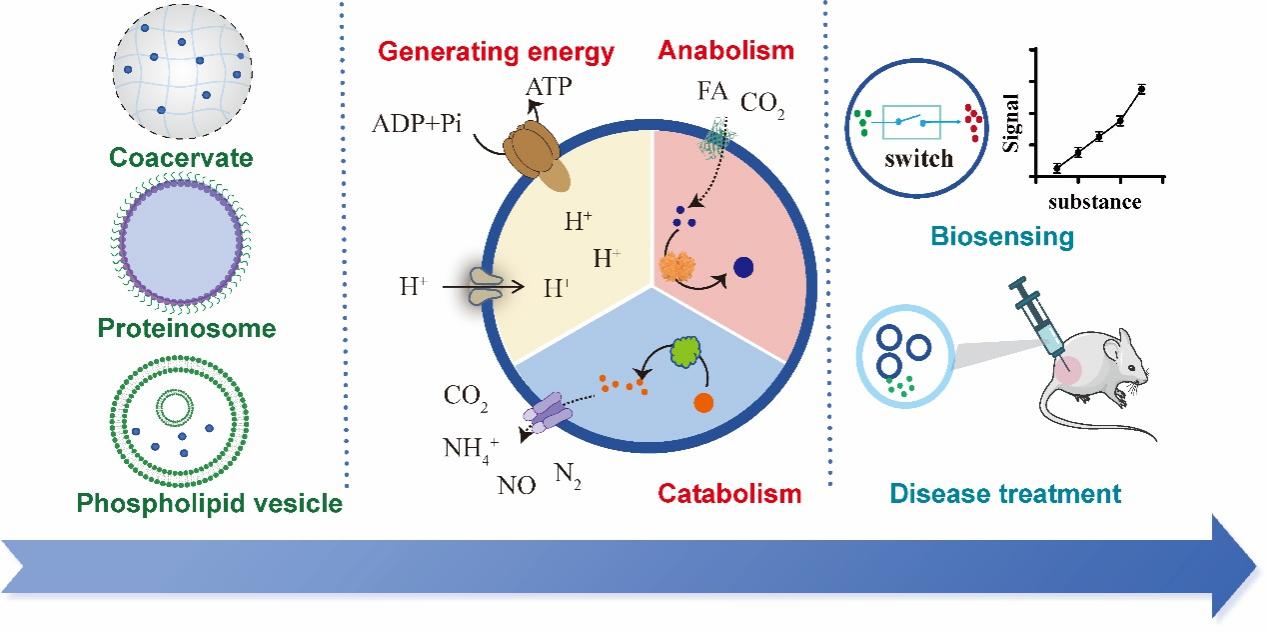
Artificial cells capable of metabolic mimicry
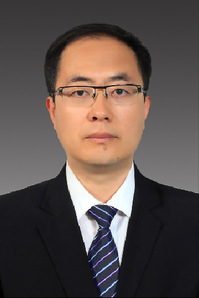 Xiaojun Han, Professor and PhD supervisor, serves as Chair of the Department of Chemistry. He is a Nationally Recognized High-level Talent and a Fellow of the Royal Society of Chemistry (FRSC). He is also a member of the Teaching Steering Committee for Chemical Engineering and Technology under the Ministry of Education, a senior member of Chinese Chemical Society, a recipient of the New Century Excellent Talents Program, and a winner of the Heilongjiang Province Outstanding Youth Science Fund.
His main research areas include artificial cells, cancer diagnosis and therapy, drug delivery, pollutant detection and remediation, and biosensors.
Author: Yan Jia
Initial review: Hailing Zhang
Secondary review: Yongchuan Sun
Final review: Guanghui Liu