Recently, Professor Xiaojun Han, a faculty member of the College of Chemical Engineering and Chemistry at Harbin Institute of Technology and a member of the National Key Laboratory of Urban-Rural Water Resources and Water Environment, and his research team achieved an important advance in the field of artificial cells. The related results were published under the title “Construction of a de novo nucleotide biosynthesis pathway in artificial cells for RNA transcription” in the Journal of the American Chemical Society. This work lays a solid foundation for the construction of autonomous artificial cells.
Nucleotides are essential components of RNA synthesis, and the de novo synthesis of nucleotides from simple compounds is essential for life. At present, transcription in artificial-cell research relies entirely on pre-supplied nucleotides rather than endogenous biosynthesis, which limits the autonomy and long-term stability of artificial cells. Achieving in situ nucleotide biosynthesis within artificial cells to sustain RNA transcription remains a major challenge.
To address the challenge mentioned above, Professor Xiaojun Han’s team successfully constructed a de novo nucleotide biosynthetic pathway inside artificial cells and utilized the synthesized nucleotides for RNA transcription. Starting from NH₄HCO₃, the pathway produces uridine triphosphate (UTP). It involves eight enzymes: carbamoyl phosphate synthetase (CPS), aspartate transcarbamylase (ATC), dihydroorotase (DHO), dihydroorotate dehydrogenase (DHODH), phosphoribosyl pyrophosphate kinase (RPPK), uridine 5′-monophosphate synthetase (UMPS), uridylate kinase (UK), and nucleoside diphosphate kinase (NDK). In addition, an ATP regeneration module composed of creatine kinase (CK) and phosphocreatine was incorporated to drive the pathway. Under optimized conditions, the system generated 0.85 mmol L-¹ of UTPwithin 180 minutes and, together with CTP, GTP, ATP, and T7 RNA polymerase, enabled RNA transcription inside artificial cells. The successful realization of the de novo UTP biosynthesis pathway and its subsequent RNA transcription within artificial cells provides a solid foundation for the constructing of autonomous artificial cells.

Harbin Institute of Technology is the sole corresponding institution for this publication. Professor Xiaojun Han, Associate Research Fellow Shubin Li, Associate Research Fellow Jingjing Zhao, and Lecturer Wei Mu are co-corresponding authors. Master’s student Yiming Liu is the first author, and doctoral students Mingrui Zhang, Yongshuo Ren, and Weichen Wang also contributed to the research.
This work was supported by the National Natural Science Foundation of China and the Key Project of the Natural Science Foundation of Heilongjiang Province.
Article link: https://pubs.acs.org/doi/full/10.1021/jacs.5c09375
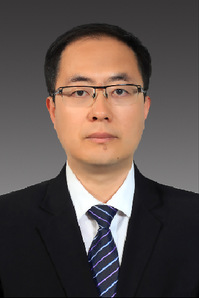
Xiaojun Han, Professor and PhD supervisor, serves as Chair of the Department of Chemistry. He is a Nationally Recognized High-level Talent and a Fellow of the Royal Society of Chemistry (FRSC). He is also a member of the Teaching Steering Committee for Chemical Engineering and Technology under the Ministry of Education, a senior member of Chinese Chemical Society, a recipient of the New Century Excellent Talents Program, and a winner of the Heilongjiang Province Outstanding Youth Science Fund.
His main research areas include artificial cells, cancer diagnosis and therapy, drug delivery, pollutant detection and remediation, and biosensors.
Source: Harbin Institute of Technology