On November 9, 2025, a delegation led by Liu Guanghui (刘光惠), Secretary of the Party Committee of this School, and Lu Songtao (卢松涛), Vice Dean of the School of Chemistry and Chemical Engineering, visited Qingdao for cooperative exchanges. The purpose of this visit was to conduct in - depth collaboration with Qingdao and its leading industry enterprises.This visit was carried out to thoroughly implement the national carbon peaking and carbon neutrality strategy. It also aimed to actively explore collaborative innovation models between the energy - chemical engineering and power industries and accelerate the translation of green, low - carbon technological output into tangible productivity. The primary goals of this visit were to jointly advance the exploration of new pathways for the green, low-carbon transformation of traditional power enterprises. Moreover, the delegation strived to build a deeply integrated ‘government-industry-university-research-application’ collaborative innovation system, and create a green, low-carbon collaborative innovation ecosystem with regional and sector-wide exemplary value.
On the morning of November 9, the delegation's first stop was Shandong Xinhong Jiye Co., Ltd. (山东新泓基业有限公司), where they attended a government-enterprise symposium themed "Transformation and Upgrading of Traditional Power Enterprises". Sun Hongfang (孙宏放), Deputy Director of the Qingdao Jiaozhou Bay Comprehensive Bonded Zone Administrative Committee (青岛胶州湾综合保税区管理委员会), attended the meeting and delivered remarks. During the symposium, relevant leaders from Shandong Xinhong Jiye Co., Ltd. systematically presented the company's cutting-edge explorations and strategic plans in areas such as new energy technology applications, integrated energy services, and energy efficiency management. These projects showcased the practical pathways for traditional energy enterprises transitioning toward green and low-carbon development.
Sun Hongfang emphasized that the transformation and upgrading of traditional power enterprises is not only an inevitable choice for their own development but also a crucial driver for the high-quality green and low-carbon development of the regional economy. The Chengyang District (城阳区) government will fully leverage its role in policy guidance and resource integration, continuously optimize the business environment, and enhance support in areas such as industrial planning, factor support, and scenario openness. This will provide stronger backing for the transformation and development of enterprises. Furthermore, he expressed the hope that this symposium would serve as an opportunity to further deepen government-enterprise-research collaboration. The aim is to jointly explore replicable and scalable transformation models, thereby injecting new momentum into the region's green and low-carbon development.
Liu Guanghui stated that this exchange has multiple significant meanings. Firstly, it offers a valuable opportunity for the application and translation of the school's cutting - edge research output. Secondly, it builds a bridge for three - party collaboration among the local government, leading industry enterprises, and the university's research teams. Leveraging the innovative achievements of Prof. Wang Jiajun (王家钧) and Prof. Chen Guanying (陈冠英) teams as a practical starting point for enterprise implementation, the parties will jointly advance the demonstration and application of relevant new technologies in areas such as energy conservation, energy storage, and next-generation batteries. This collaboration aims to empower the green and low-carbon transformation and upgrading of the traditional power industry, concretely explore novel, replicable, and scalable models for transformation and development, and continuously contribute technological strength to advancing the rapid development of regional new energy.
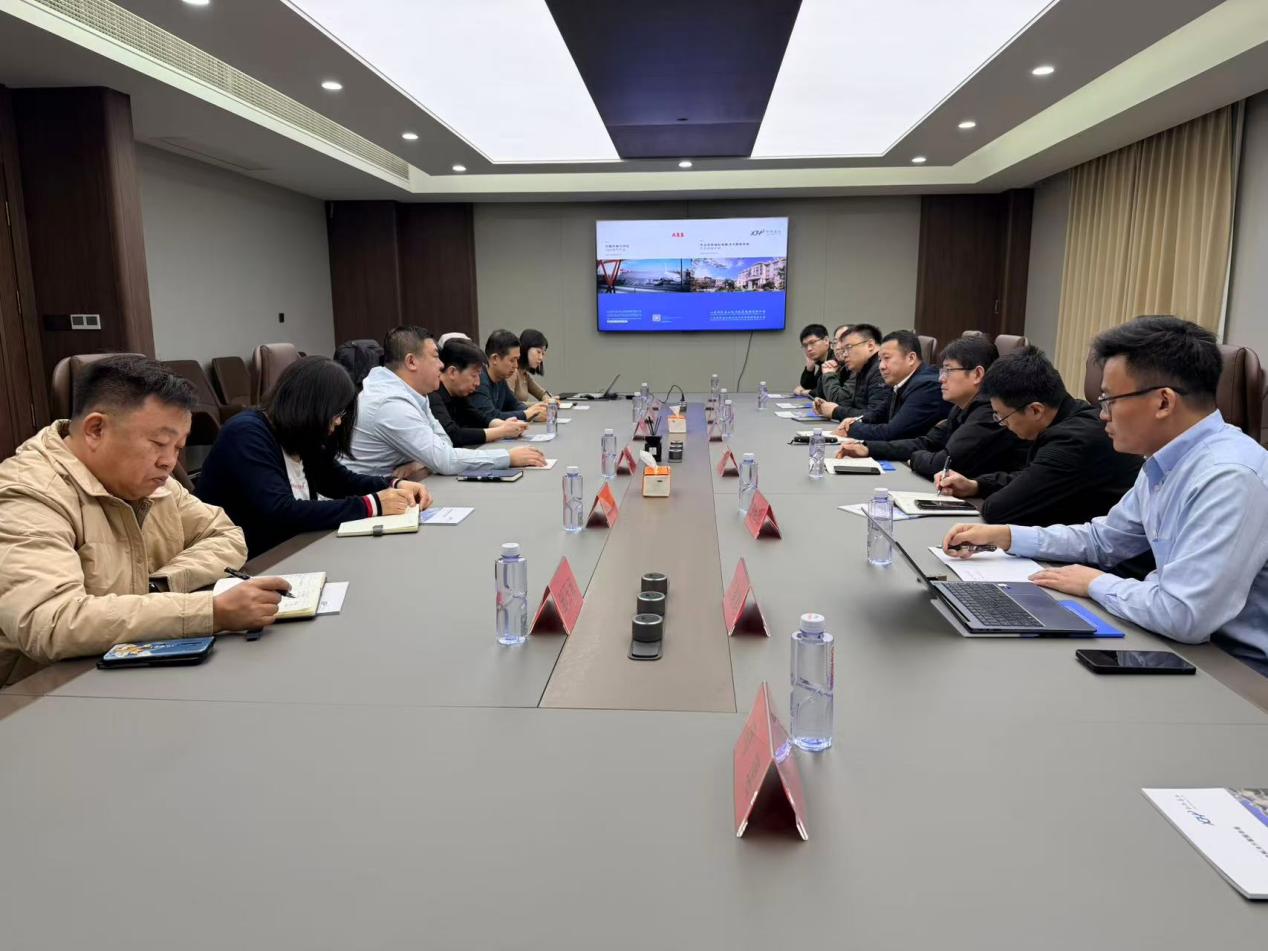
Exchange Session with Shandong Xinhong Jiye Co., Ltd.
Later, the delegation visited the Qingdao Innovation and Development Base of Harbin Institute of Technology (Weihai) (哈尔滨工业大学(威海)青岛创新发展基地) (hereinafter referred to as the "Qingdao Base") for an on-site inspection. During the inspection the focus was on evaluating the base's research environment, functional layout, and supporting facilities. During the subsequent symposium, Prof. Li Menggang (李蒙刚) from the school provided a systematic report on the progress of his team's development. Subsequently the three parties engaged in in-depth discussions on specific issues including support for team relocation, policy support systems, and living service provisions. Furthermore, they held foresight exchanges on measurements for technological output transfer and pathways for market expansion.
Liu Guanghui pointed out that the Qingdao Base is a crucial strategic pivot for the school to interface with Qingdao's industrial forefront and attract high-end talents, and also as a vital bridge connecting technological innovation with regional development. He emphasized the need to closely focus on Qingdao's industrial needs in the fields of new energy and advanced materials. Efforts should be made in a systematic and structured manner to facilitate the introduction and integration of the school's mature research outcomes. By fully leveraging Qingdao's geographical advantages, industrial foundation, and policy profits, the goal is to promote effective, application-scenario-driven models for technology transfer. The successful implementation of such transfer models will generate e tangible results which will establish the Qingdao Base as a highland for innovative development with radiating influence across the entire Shandong region.
Sun Hongfang stated that the district government will comprehensively strengthen service guarantees, with particular emphasis on talent introduction policies and scientific research supplementary infrastructure. This commitment aims to create a high-quality environment for the base's construction and development, fully supporting its transformation into a core engine leading innovative development in the energy industry, injecting strong momentum into the high-quality development of the regional economy.
Wang Bailing (王佰玲), Director of the Qingdao Base, stated that the base will closely align with the university's first-class universities and first-class disciplines development strategy and deeply integrate into Qingdao's industrial agglomeration landscape. It will accelerate the establishment of high-level, specialized R&D teams, striving to achieve substantive breakthroughs in core technologies and technology transfer, fully demonstrating the base's efficacy in scientific research and innovation.
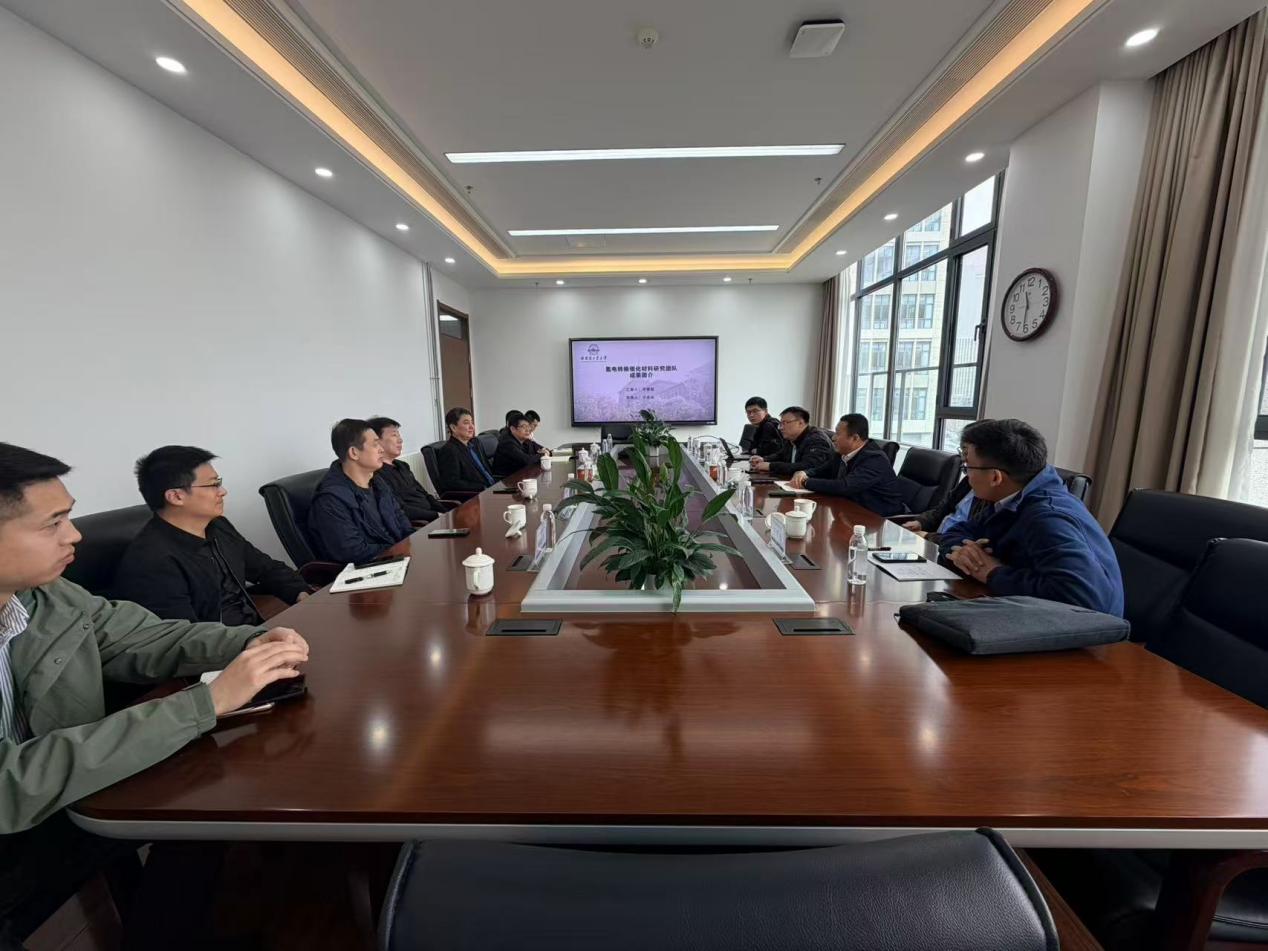
Exchange Session with the Qingdao Innovation and Development Base of Harbin Institute of Technology (Weihai)
On the afternoon of November 9, the delegation visited relevant institutions of the State Power Investment Corporation (SPIC) in Qingdao. During this visit both sides engaged in in-depth discussions on cutting-edge technologies and industrial practices in the energy and power sector. Prof. Chen Guanying from the school systematically introduced his team's technological output and innovative breakthroughs in new energy fields such as photovoltaics and wind power, with a focus on explaining the industrial application prospects of the related technologies. Meanwhile representatives from SPIC shared the enterprise's practical experience and model innovations in the full-chain management of power project investment, construction, and operation.
Both sides conducted in-depth discussions focusing on topics such as the evolutionary trends of the future power market, pathways for constructing a new-type power system, and collaboration on key technological innovation. As a result of these exchanges, a solid foundation has been laid for subsequent substantive project collaboration.
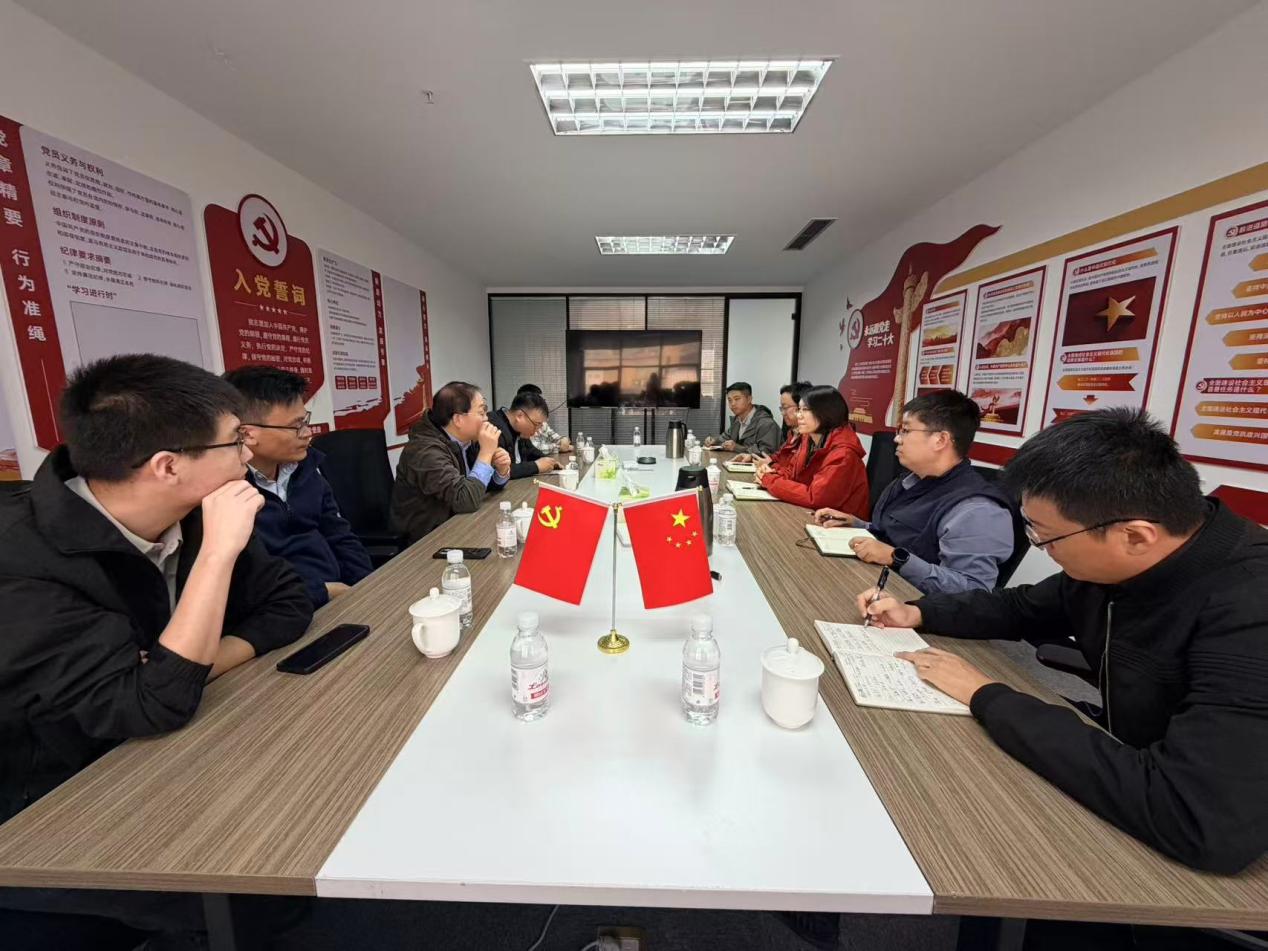
Exchange Session with the State Power Investment Corporation
This thematic research trip to Qingdao has achieved remarkable results. During the trip, the delegation gained precise insights into the status of technological innovation and industrial practices within the green and low-carbon sector. Subsequently, the delegation systematically expanded the strategic cooperation network with leading enterprises, local governments, and research bases, effectively consolidating a powerful synergy for government-industry-university-research-application collaboration. Taking this research trip as a new starting point, the School of Chemistry and Chemical Engineering will continue to deepen university-enterprise coordination and university-local government linkage. It will focus on overcoming core technologies, accelerating the translation of scientific and technological achievements into tangible productive forces, and strive to deliver HIT's contribution to serving the national energy strategy and regional high-quality development. The school is committed to injecting strong momentum into fostering new quality productive forces and empowering green, low-carbon development, thereby contributing wisdom and strength to the comprehensive building of a modern socialist country.